A good Botox plan starts before the syringe appears. I learned this the first month I began treating long‑distance runners whose brows clenched from miles under summer sun. Their foreheads weren’t just creased, they were trained. When we mapped where their muscles fired hardest, then dialed dose and depth by zone, their results lasted longer and looked more like them. That’s the point of a Botox roadmap: fewer surprises, fewer regrets, and a face that reads as rested rather than “treated.”
Start with an aesthetic philosophy you can live with
Every patient brings a different threshold for movement and a different job for their face to do. Trial attorneys who rely on expressive brows, yoga teachers whose brows climb all day, new parents who want to look less tired on video, each needs a separate plan. Before you talk dose, agree on a philosophy. Do you want subtle rejuvenation, or a stronger softening of expressive lines? Do you welcome a small brow lift or prefer a flatter brow? Your answers anchor realistic goals and keep the roadmap focused on your baseline anatomy, not a trend.
I aim for movement preservation when it Mt. Pleasant botox treatments suits the patient’s personality. Botox facial softening should quiet the harsh notes without muting the melody. That often means a blended approach: precise dosing to dynamic muscles, lighter touch around the edges, and feedback after the first cycle to find your sweet spot.
The anatomy behind a plan
Botulinum toxin is a muscle relaxation therapy. It blocks acetylcholine at the neuromuscular junction, which reduces muscle activity for three to four months on average. That’s the simple part. The planning part is understanding how facial muscles overlap and counterbalance each other.
The frontalis lifts the brows vertically. The corrugator and procerus pull the brows down and inward. Orbicularis oculi squeezes the eyes and tethers the tail of the brow. If you relax one zone without respecting its antagonists, you risk eyebrow heaviness, spocking at the tail, or flatness across the forehead. A good map respects these forces in motion.
A basic division of facial zones helps during consultation:
- Upper face: forehead lines from frontalis, frown lines from glabella complex, crow’s feet from orbicularis oculi. Midface and nose: bunny lines, gummy smile modifiers, nasalis flaring. Lower face and neck: DAO (downturned corners), mentalis dimpling, lip lines, masseter hypertrophy, platysmal bands.
Within each zone, dose and injection depth can vary with skin thickness, muscle bulk, and habitual expressions. Someone who squints to read street signs will show more lateral crow’s feet and a strong zygomatic pull that needs careful balance. Someone who talks with their lower face will display more mentalis and DAO activity.
What you can expect from Botox, not what it cannot do
Botox cosmetic injections explained plainly: they soften dynamic lines that appear with expression. Static etched lines can be improved, but they may need Botox paired with collagen‑building strategies such as microneedling or energy devices. Botox dynamic line correction happens quickly, with changes starting day 2 to 4, peaking near day 10 to 14. Results usually hold for 3 to 4 months, sometimes 5 to 6 with low baseline activity and steady maintenance.
It does not lift sagging tissue, replace volume, or brighten pigment. It can subtly change facial shape through muscle activity reduction, for instance, a slimmer jawline with masseter treatment or a micro‑lift of the brow tail through lateral orbicularis dosing. It can also help with habit‑breaking wrinkles, where repeated micro‑movements etch lines, by interrupting the muscle memory effects that reinforce those creases. Think less frowning while reading email, botox SC fewer unconscious brow lifts when thinking, less chin gripping during stress.
The assessment that sets the roadmap
A proper Botox aesthetic assessment happens at rest and in motion. I ask patients to do their usual expressions, not exaggerated ones. A standard set includes looking up with raised brows, scowling, smiling with the eyes, flaring the nose, showing the teeth broadly, pursing the lips, and clenching the jaw. During each expression I palpate where the muscle enters and exits, how far lateral fibers extend, and whether one side dominates.
I take note of brow height, frontalis height (low, medium, high), and whether horizontal lines cross mid‑forehead at rest. Patients with low set brows and heavy eyelids are at higher risk of perceiving heaviness from aggressive forehead dosing. Those with tall foreheads and strong frontalis often benefit from layered dosing: slightly deeper points centrally where the muscle is thick and more superficial micro‑drops closer to the hairline to avoid edge heaviness.
We also talk skin quality. Thinner, finely wrinkled skin requires less volume per point and sometimes more points for even spread. Thicker, sebaceous skin often tolerates moderate doses with wider spacing.
Mapping: from zones to points
Botox facial mapping techniques look like a schematic on your face. I mark while you animate, not off a generic template. For the glabella complex, I track the medial corrugator belly and tail because the lateral tail often runs higher than people expect. A too‑low injection risks eyelid diffusion, while a too‑high injection misses the pinch that creates the “11s.” I prefer a fan pattern that brackets the main pull, then a central procerus point at the depth that matches its thick, vertical fibers.
For the forehead, injection depth explained quickly: the frontalis is thin and superficial. I use very superficial blebs for fine lines at the upper third and slightly deeper deposits where creases are etched. I shift points higher or lower based on your frontalis height and your preferred brow position. Patients who like a lifted brow tail get more lateral support and less dosing over the lateral frontalis. Those prone to spock peaks need a balancing point near the lateral third, using microdosing rather than a heavy drop.
For crow’s feet, orbicularis is a sheet muscle. I treat along the smile radiance lines, avoiding the malar region where diffusion can track downward and cause cheek heaviness. When patients seek a gentle lateral brow lift, I place a small, well‑superficial point at the superior lateral orbital rim. For bunny lines across the nose, tiny intradermal micro‑points work well. For the lower face and neck, depth and angle matter more. The DAO sits just lateral to the mouth corner, mentalis sits centrally over the bony chin, and the platysma forms vertical bands that tether the jawline. Masseter dosing aims for the mid‑belly of the muscle, not the anterior border, to avoid smile change.
Precision dosing and placement strategy
A precise dose beats a large dose. More is not better if it flattens your expression or unbalances antagonist muscles. A typical upper face total ranges broadly, for example, 10 to 40 units across forehead plus glabella plus crow’s feet, but the spread matters more than the sum. I structure a precision dosing strategy with the rule of thirds: glabella receives enough to neutralize the down‑pull, forehead gets a lighter touch to preserve lift, and crow’s feet dosing respects cheek dynamics.
Microdosing earns its keep when you need refinement rather than overhaul. Small droplets, two to four units per point, in close spacing can smooth texture without freezing. This is useful for high‑movement professions, on‑camera work, or first‑time patients who fear a change in their “readability.” Over several cycles, botox facial muscle training happens: the strongest habits calm down, the need for dose may decrease, and longevity can improve as the skin has time to remodel.
Timing and the long game
Botox long term outcome planning belongs in your first visit. If we treat glabella and forehead now, when do we add crow’s feet or chin? Do we plan pre‑event softening six weeks before photographs? Do you want to gradually lengthen intervals, or keep a steady every three‑to‑four‑month rhythm?
There is a muscle memory element. When repeated at steady intervals, botox muscle activity reduction can weaken the reflex to frown or squint. That can slow wrinkle progression. For some, we taper dose slightly after the second or third cycle, adding strategic micro‑points to maintain control without the heavy hand.
Intervals change with lifestyle. Endurance athletes, heavy lifters who Valsalva, and patients with high baseline expression patterns often metabolize faster. On the other hand, those who manage sun, hydrate well, and maintain a stress plan sometimes enjoy four to five months. I set expectations as a range, not a promise.
Planning by facial goals
Aging prevention injections for the late twenties to early thirties focus on habit breaking and early wrinkle control. Think light glabella dosing to reduce unconscious scowling at screens, a few forehead micro‑drops to soften emerging horizontal lines, and occasional crow’s feet softening if squinting is constant. The aim is botox wrinkle prevention strategy, not a frozen canvas. Dose is conservative, points are fewer, reassessment is early.
For facial refinement in the midface and lower face during the thirties and forties, we consider DAO and mentalis when the smile corners pull down or the chin dimples. A small dose to platysmal bands can clean the jawline in animated expressions. Masseter treatment can slim a square jaw and ease clenching. Here, the trade‑off is function. Over‑treat the masseter and chewing feels odd for a few weeks. Dose gradually, test one side at a time if needed, and keep bite force for your diet and lifestyle.
For facial softening in the fifties and beyond, plan more around balance. Skin changes, volume shifts, and ligament laxity interplay with muscle pull. Botox cannot replace lift or volume, but it can remove visual tension. Address glabella heaviness to brighten the eyes, but protect forehead lift in low‑brow patients. Consider that etched lines may need support from skin therapies or fillers to reach your goal.
Movement preservation without compromise
Patients often ask for “natural,” which usually means keeping familiar expressions. I test this by having you run through your expressive set two weeks after treatment. If your smile dims at the eyes too much, we reduce lateral crow’s feet dosing next cycle. If your brow lift feels stifled, we ease forehead points or shift them higher. If your “thinking lines” are gone but you feel flat, we let a few strategic wrinkles return with lower doses or larger spacing. Botox expression preserving injections are about trade‑offs, not absolutes.
I also caution against chasing every tiny line. Some micro‑folds add life to a face. A face that never creases often reads as less trustworthy in casual interactions. The roadmap builds in room for individuality.
Technique differences that matter
Injector technique comparison is not about who uses a fancy device, it is about consistency and anatomical respect. Needle gauge and length affect comfort and accuracy. A short 30 or 32 gauge needle allows superficial forehead blebs without overshooting. Angle matters: intradermal for fine creases, just‑subdermal for thin frontalis, deeper for corrugator’s belly. Aspiration is a debated topic, but slow, controlled injections and avoidance of key vessels reduce bruising risk.
Placement strategy wins over dose alone. A single misplaced unit near the levator can drop a brow, while five well‑placed micro‑drops can preserve your signature expression. Depth and spread must match fiber direction. A good injector can explain every point before it happens and invite your input.
Safety essentials you should hear out loud
Botox cosmetic safety overview is straightforward. The product has a long safety record when used in standard doses. Common side effects include mild bruising, tenderness, and temporary headaches. Less common issues are asymmetry, brow heaviness, eyelid ptosis, and smile changes when lower face doses spread. Most temporary effects resolve as the drug wears off.
You can reduce risk with a few choices. Stop blood thinners like high‑dose fish oil or aspirin a week prior if your physician approves. Avoid heavy workouts, saunas, or massages over the treated areas for the rest of the day. Keep your head upright for about four hours after treatment to limit unwanted spread. Do not schedule critical photographs or on‑camera events in the first ten days after a new pattern; give yourself time to adjust.
Lifestyle choices that shape results
Botox treatment longevity factors include metabolism, muscle mass, sun exposure, and stress behaviors. Squinting at screens, dehydration, and unprotected outdoor time drive dynamic lines to return faster. A small pair of habits can extend results: prescription or appropriately tinted glasses for bright days, screen brightness adjustments, and posture that reduces chin gripping at desks. Patients who adopt these changes often stretch an extra few weeks from the same dose.
Sleep position plays a quiet role. Side sleepers form parallel lines around the eye and cheek from nightly compression. Botox cannot fix a pillow crease. A smoother pillowcase and mindful positioning help.
A practical first‑year roadmap
Many patients benefit from a staged first year that tests responsiveness and builds a stable pattern. Here is a concise structure that works in my practice:
- Visit 1: Baseline mapping with light to moderate dosing focused on your top concerns. Photos and short video of expressions. Day 14: Quick check. Adjust with micro‑drops if needed to even asymmetry or free movement you miss. Visit 2 at 3 to 4 months: Repeat successful points, tweak those that felt heavy or underpowered. Consider adding a secondary zone if the primary is stable. Visit 3 at 6 to 8 months from start: Evaluate longevity. If you held well, stretch the interval a couple of weeks. If you wore off earlier, keep the same timing but consider redistributing dose toward the most active fibers. Year review: Compare photos, assess wrinkle progression control, and decide whether to maintain, scale back, or broaden the plan.
This staged approach turns guesswork into data. By visit three, you usually know your dose range, the best spacing, and any seasonal adjustments. For example, teachers often need more crow’s feet control during spring allergies, while skiers need better squint control during winter sun.
Managing expectations around rebound and edges
Wrinkle rebound prevention is about not letting the muscle regain its full, harsh pattern between cycles. If you wait six to eight months and then re‑treat, the muscle often retrains back to old habits. That is fine if budget or preference dictates, but understand you are starting from scratch each time. If your goal is smoothness with less product, keep cycles closer in the first year to leverage muscle memory effects, then consider lengthening.
Edges matter more than centers. Treat the bulk of the corrugator and you control the frown, but leave a thin active slip and you may still see a faint line. In the forehead, skip the top third entirely and you risk a visible demarcation line between treated and untreated zones. That is why micro‑feathering at the edges creates a natural gradient.
Special cases that need extra judgment
Asymmetry: Nearly every face is asymmetric. Right corrugator stronger than left, left brow sits lower, one eye rounds more. Plan for it. Asymmetric dose is appropriate and often necessary. It might be an extra one to two units on the stronger side rather than symmetric dosing that preserves the asymmetry.
Heaviness risk: Low brows with dermatochalasis need very cautious forehead treatment. Control the glabella to lighten the downward pull and keep forehead doses minimal. Allowing some frontalis activity maintains eyelid opening. In these patients, botox facial harmony planning focuses on the frown complex and lateral crow’s feet, not the mid‑forehead.
Athletes and grinders: Masseter treatment can be a relief for bruxism, but dose conservatively at first and watch chewing comfort. For runners who squint into wind and sun, plan stronger crow’s feet control, but protect the lateral brow from over‑lift that looks artificial mid‑stride.
On‑camera professionals: Lighting punishes flat foreheads. Choose botox subtle rejuvenation injections, including microdosed horizontal points and minimal glabella dosing to keep micro‑expressions alive. A two‑week buffer before shoots is mandatory.
Maintenance rituals that keep outcomes steady
Good skincare supports Botox outcomes. Retinoids, vitamin C in the morning, and diligent sunscreen reduce the contrast between treated and untreated zones by improving texture and pigment. Hydration shows. Dehydrated skin creases more readily, making you think your Botox wore off early, when it is a skin issue, not a muscle issue.
Consider periodic skin therapies for etched lines that Botox cannot erase alone. Light microneedling or non‑ablative lasers create collagen that softens static creases. When paired with steady Botox, results compound: muscle calms the etching, skin gains structure.
When to say no or not yet
A Botox roadmap should include red lights. Migraines from forehead tension may improve with treatment, but diagnostic clarity matters. If a patient has unrealistic expectations, wants a decade of etched lines gone in a single session, or demands zero movement, I slow the process, educate, or decline until we align. New neurological symptoms, pregnancy, lactation, and certain neuromuscular disorders are reasons to defer.
Budget matters too. If funds only allow one small zone, prioritize the area that contributes most to facial tension relief and perceived fatigue. Often that is the glabella. Starting there can change how your whole face reads.
The consult that earns your trust
A strong botox cosmetic consultation guide rests on three tasks. First, translate your goals into muscles and patterns. Second, explain the map in plain language, including injection depth and placement strategy. Third, invite collaborative calibration: what will we adjust if you feel too tight, too loose, or uneven at two weeks? If your injector cannot articulate these pieces, keep shopping.
A sample upper‑face plan with reasoning
Picture a 38‑year‑old product manager who frowns at screens and lifts her brows during long Zoom calls, with mild crow’s feet. She wants less sternness but plenty of expression.
I would anchor the roadmap with glabella control, perhaps mid‑range dosing across five points to subdue the habitual scowl. For the forehead, I would use light micro‑doses spaced widely, with an under‑dose laterally to preserve her ability to animate in meetings. For crow’s feet, two lateral points per side to soften without dimming the eye smile. I would book a two‑week check and plan to feather in one or two extra forehead micro‑drops only if edge lines remain distracting during neutral expression.
By cycle two, we would see if her urge to frown faded. If it did, we could reduce glabella slightly and invest one or two units in lateral brow shaping. This maintains botox facial expression balance and supports a natural aging support philosophy, not a rigid mask.
What success looks like
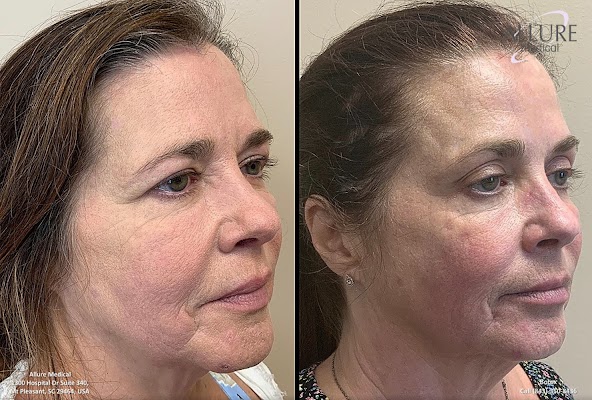
Good botox cosmetic outcomes are quiet. People say you look rested, not different. Eyebrows sit where you like them. Your smile reaches the eyes without a crumple of lines that read as fatigue. Your forehead shows thought without shouting every surprise. You feel less facial stress, fewer tension headaches from overworked muscles, and less urge to scowl. Your roadmap becomes routine, not a guessing game.
Quick checklist before your first treatment
- Define your aesthetic philosophy in one sentence. Movement preserved or maximum smoothing? Identify top two expressions that bother you in real life, not just in photos. Share work and lifestyle factors that drive muscle overuse, like squinting or clenching. Set a follow‑up at day 10 to 14 for calibration. Do not skip it. Commit to sun protection and realistic intervals for the first year.
A final word on aging with intention
Botox is a tool for facial wellness when used with a plan. It relieves facial tension, supports smoother skin aging management, and refines how your expressions read. A thoughtful map respects anatomy, your job, your habits, and your preferences. It leaves space for individuality while reducing the signals that make you look stressed or tired. With precision dosing, careful placement, and steady maintenance, Botox becomes less about erasing and more about editing. You stay recognizably you, just with the volume of your harshest lines turned down to a comfortable level.